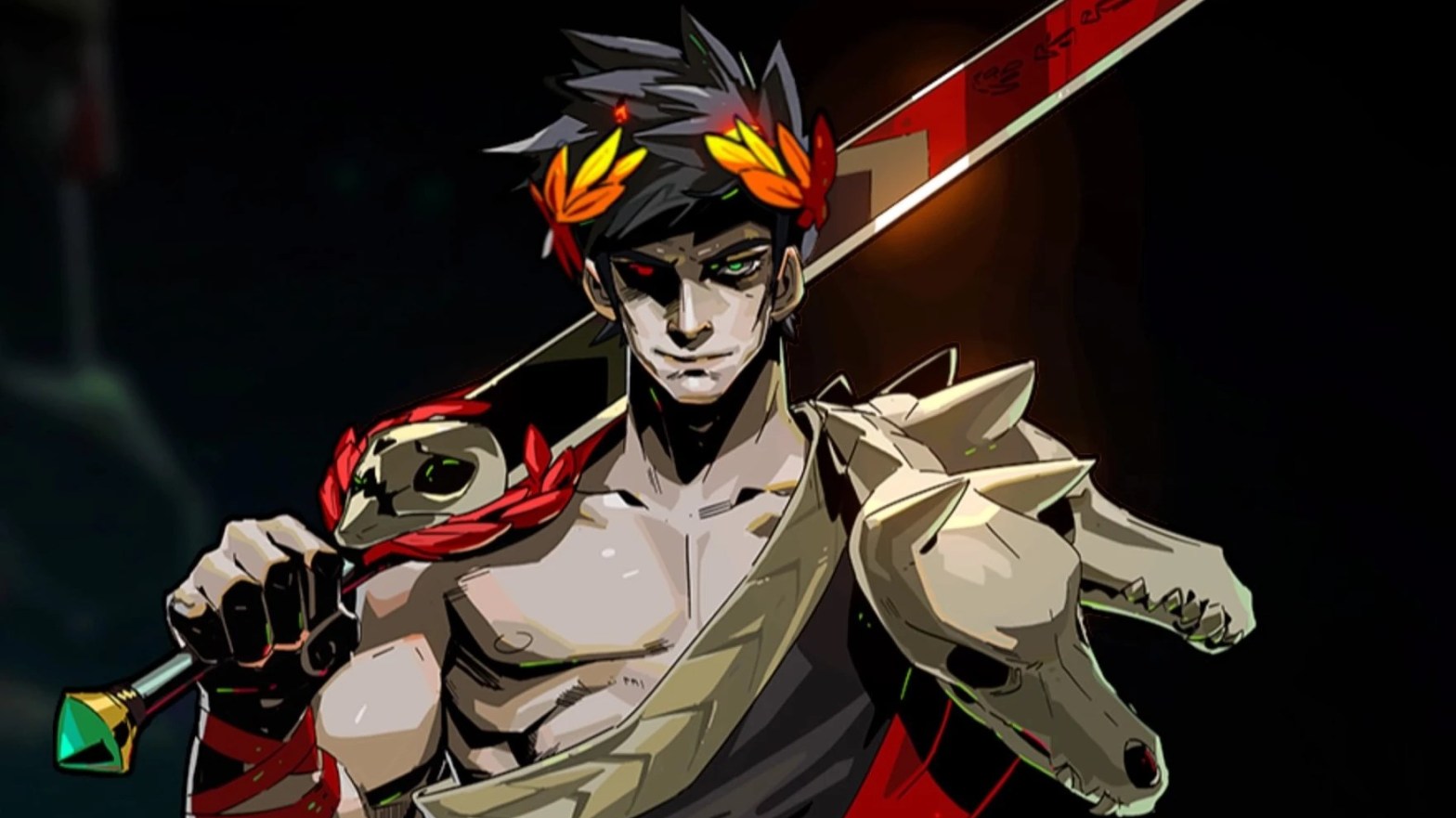
You may or may not know by now that I do not enjoy grind in games. I have very little patience. If you make something difficult enough that I have to do it in game more than 5 times on the bounce, I’m going to be mad about it!
As a roguelike game, repetition is kind of Hades’ vibe. Not a game I’d naturally gravitate towards but with the release of “God Mode”, I suddenly felt more inclined to give it a go. God Mode is designed to make the story of the game quicker to unlock by providing a damage resistance stat buff that increases by 2% each time the player dies, capping at 80% if you get to that point.
I am such a fan of this kind of accessibility option which allows different types of gamers to enjoy play on their own terms. I struggled through Control and though I was satisfied to get to the end – the journey wasn’t wholly fun for me. It made me appreciate gaming in a different way and I thought the game was brilliant, but respawning enemies in rooms i’d already cleared got in the way of my exploration.
Hades was a different story. God Mode is well balanced, giving the player room to improve their fighting strategy and weapon mastery, whilst moving you along imperceptibly in the background. Progress comes faster, removing the grind and guarding against the potential of frustration.
This mechanic, despite being brilliant, isn’t the reason that I connected with this game so much though. It was the gateway to what transpired to be a thoughtful, well paced and addictive game to play. I loved it! I loved it so much that despite diving in with a view to smashing out the story as quickly as possible – I sank 60+ hours into the game and there’s still more I’d be happy to do.
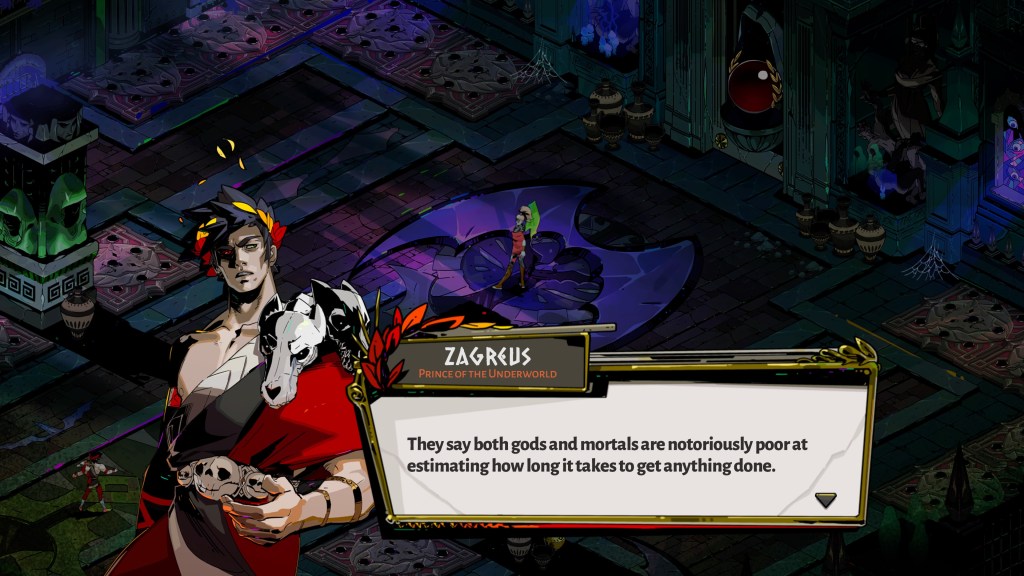
Hades feels good for my brain. It allows for single focus which in a real world of distraction, is so welcome. Each run requires you to concentrate and hone in on the kind of escape run you need to do to get as far as possible in the game overall. You have six weapons to unlock and each one makes your escape attempt unique. Those weapons can be upgraded and made stronger and the more you practise, the better you get. Which when I write it, is kind of obvious. But the difference here is that a setting like “God Mode” allows you to fail forward, something that often roguelikes do not do to such an extent.
As you’re learning the moves and figuring out your enemies, you’re progressing without having to devote countless hours to becoming a master. It doesn’t just hand you the keys to the exit and you’ll still have to work for it, but via a learning curve that is smoother and more forgiving. You get to focus on enjoying the story and causing havoc across The Underworld knowing that when you fail, your escape next time will be two percent easier. Yes, please.
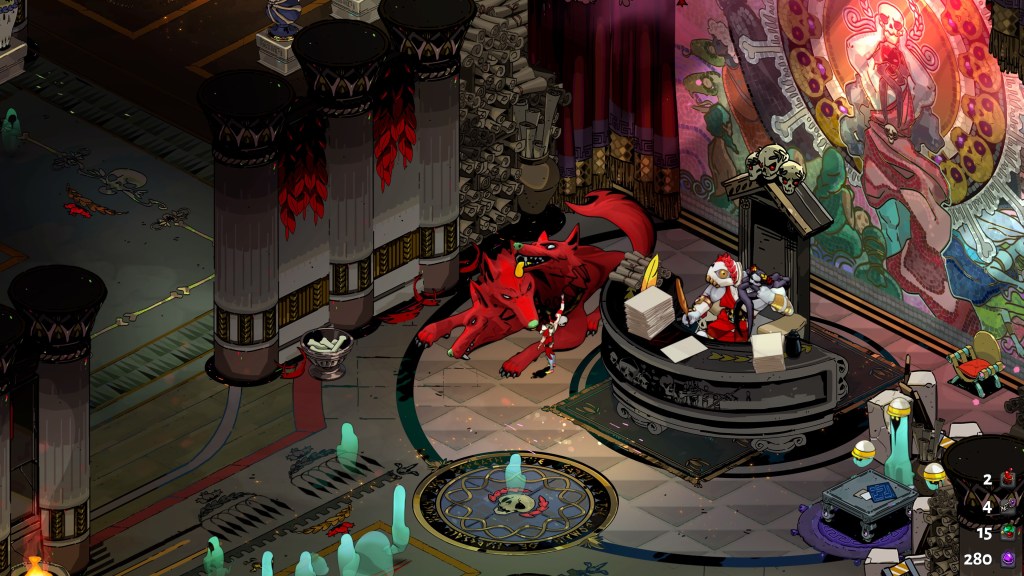
The story was magical in a way I hadn’t expected. Zagreus’ journey is compelling and each time you escape or die trying – more of it is unlocked via the characters you get to know along the way. And not just his story. The House of Hades and The Underworld is full of a cast of characters who all have their own histories and burdens to bear. The tragedies and triumphs of characters from Greek Mythology are revealed as you play.
They may be in the Underworld now – but their lives are just as turbulent and colourful as they ever were. You and Zagreus can even help to heal some old wounds if you care to try. Orpheus, Eurydice, Achilles, Nyx, Demeter, Poseidon, Zeus, Sisyphus and Athena to name but a few that you’ll meet. The cast is huge and the more time you spend with them, the more of their story they will reveal.
You never know who you’re going to meet because the Underworld itself doesn’t remain the same. The characters are often out on missions of their own and the route to the exit changes every time. Narratively it’s a scheme to try to keep Zagreus locked down as long as possible. Mechanically it keeps things interesting. Each time you emerge back at Hades’ House after a defeat, the characters who are home commiserate with you and offer you advice, friendship and in some cases, love. Hades masters the permadeath mechanic of a roguelike to truly make failing worth your while.
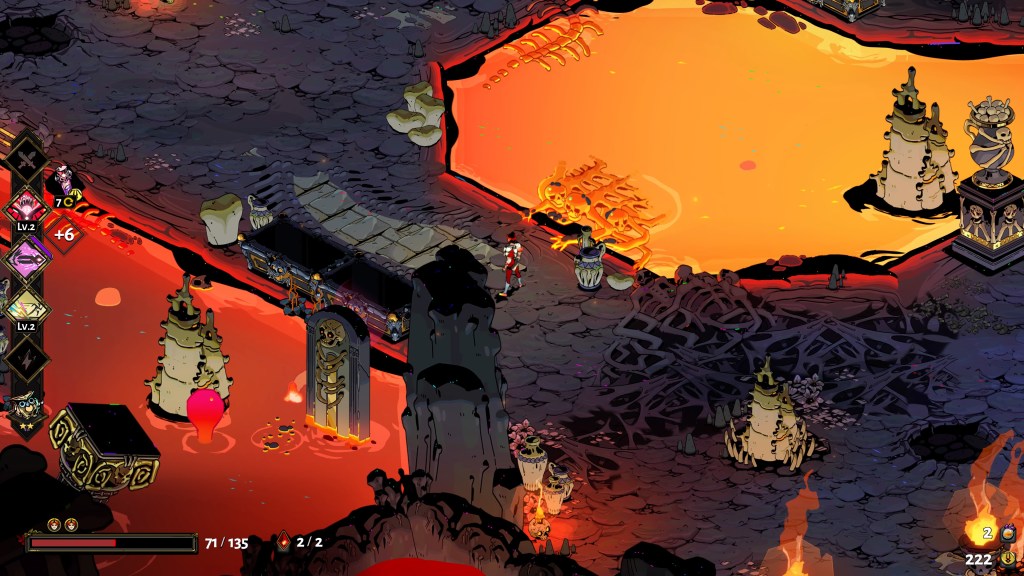
The way creators Super Giant find ways to keep things varied doesn’t stop there. It wouldn’t be Greek Mythology without prophesies and there are many prophesies pertaining to Zagreus. By making a prophecy come true you receive a reward that can help level you up in a permanent way in the game by adding more tactical options to your arsenal. Or the reward may help to strengthen the relationships you are pursuing which helps uncover more of the story. Each realm also has different kinds of enemies and environments that test you and change up the game.
The Olympian Gods (your Uncles and Aunties) spawn randomly on a run to help Zagreus with a choice of boons to improve your chance of success on an attempt. The boons all behave differently forcing you to switch up your play style depending on which one you get. All of this means that sometimes escape is the last thing on your mind. Sometimes you’re going out into the chaos simply in the hopes of running into Patroclus, or to gather as much darkness as possible to put into The Mirror of Night when you encounter your next defeat.
I am so pleased I got to play this game by virtue of an accessibility option that allows you to truly fail forward. Life can be hard and I want my games to stay entertaining – challenge me, but don’t punish me. Whilst the escape attempts in Hades are very fun in a deliciously chaotic way, the heart of this game, as with most, is in it’s stories. The short games are your runs out into the Underworld. The long game is in the relationships you will forge with the characters you encounter; the hearts you will mend by listening and exploring; and the family you will cement for Zagreus as he finally learns about his past.
Hades is a very special game. Smart, stylish and strategic, it embodies the chaos and depth of Greek Mythology perfectly. It balances tragedy with humour and challenge with accessibility. And the more people that get to experience that, the better!

 Just a Game